
WALANT - Wide Awake Surgery
Wide Awake Local Anaesthesia No Tourniquet (WALANT) surgery is a modern surgical approach that allows procedures to be performed under local anaesthesia — without general anaesthesia and without using a tourniquet. This technique has transformed the way many hand and wrist surgeries are performed, improving patient comfort, enhancing intra-operative assessment, and speeding recovery.
Leadership in WALANT Surgery
Prof. Odette Koch is one of the most experienced WALANT (Wide Awake Local Anaesthesia No Tourniquet) hand surgeon in South Africa and is widely recognised for her expertise in this innovative technique. She regularly shares her knowledge through instructional courses, both online and in-person, for national and international audiences, including the American Society for Surgery of the Hand (ASSH), the Kenyan Orthopaedic Surgeons, and the South African Society for Surgery of the Hand (SASSH).
A Personal Passion for WALANT Surgery
When indicated, WALANT surgery is Prof. Odette Koch’s favourite surgical technique and a true passion of hers. She has published extensively on the subject and has seen firsthand how WALANT has transformed her practice, often in ways she had not anticipated. By enabling surgery without general anaesthesia, she can help patients who might otherwise have been considered high-risk and unable to undergo surgery. Beyond providing expert surgical care, Prof. Odette Koch finds fulfilment in communicating with patients, offering support, and providing reassurance throughout the treatment process. Many patients initially experience hesitation or anxiety due to fear of the unknown, but they often express relief and gratitude once the procedure is completed. By adopting WALANT techniques, she aims to expand safe surgical options and make surgery accessible to a broader patient population.
What is Wide Awake Surgery?
WALANT surgery is an abbreviation for Wide Awake Local Anaesthesia No Tourniquet. Unlike traditional surgical methods that rely on general anaesthesia or sedation, WALANT uses local anaesthetic combined with epinephrine to numb the surgical site while maintaining normal blood flow. A tourniquet — which can cause discomfort and restricts blood flow — is not required.
By performing surgery while the patient is fully awake and comfortable, WALANT allows Prof. Koch to observe real-time tendon and nerve function during the procedure. This can improve surgical precision and help tailor the repair to each individual.

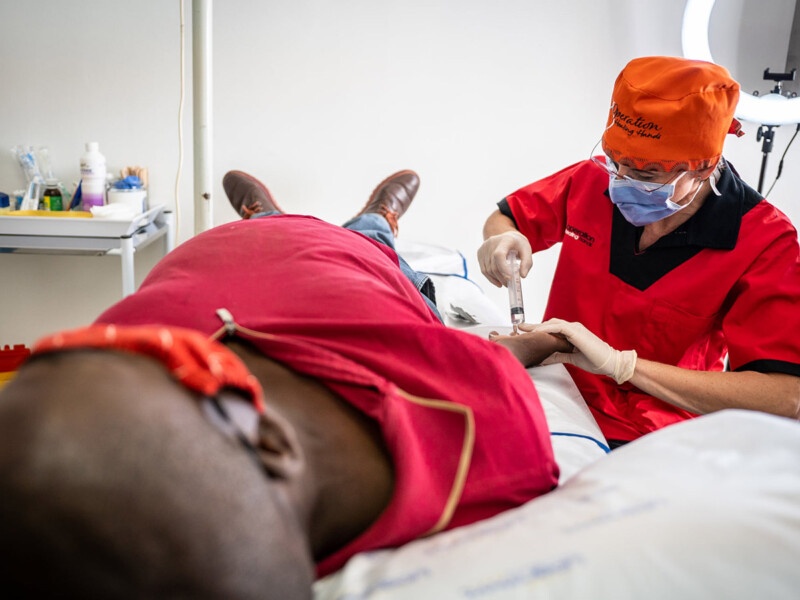
The benefits of this surgical method
This technique offers several important advantages:
Greater patient comfort: Procedures are performed while patients remain awake and relaxed, without the after-effects of general anaesthesia or sedation.
No tourniquet discomfort: By eliminating the use of a tourniquet, WALANT avoids the pressure and pain often associated with traditional upper-limb surgery.
Real-time functional assessment: Because the patient is awake, movement and tendon tension can be assessed during surgery, allowing for more precise repair.
Quicker early recovery: Reduced anaesthetic impact and earlier mobilisation often result in a smoother, faster initial recovery period.
Suitable for more patients: WALANT is a safe option for patients who may not be ideal candidates for general anaesthesia due to underlying medical conditions.
Conditions that can be treated with this method
Prof. Koch uses the WALANT technique for a variety of hand and wrist procedures, including:
Tendon repairs and transfers
Nerve decompression procedures (such as carpal tunnel release)
Trigger finger release
Mass and cyst excisions
Certain fracture stabilisations
Each case is carefully evaluated to determine whether WALANT is the most appropriate option, ensuring patients receive tailored, safe, and effective care.

What to Expect During WALANT Surgery
Prior to the procedure, Prof. Koch carefully reviews your medical history, symptoms and functional goals.
On the day of surgery:
Local anaesthetic is administered at the surgical site.
You remain awake and comfortable throughout.
Prof. Koch performs the procedure, often asking you to move or flex the hand or wrist to ensure optimal repair.
You return home the same day with personalised post-operative care instructions to support recovery.
Because WALANT avoids general anaesthesia, many patients appreciate a quicker return to normal routines.
Why Choose WALANT with Prof. Koch?
Prof. Odette Koch’s expertise extends beyond surgical skill: she is committed to refining techniques that improve patient experience and outcomes. Her leadership in WALANT surgery is rooted in:
Clinical excellence in upper limb orthopaedic surgery
Evidence-based application of local anaesthetic techniques
Clear communication that empowers patients
Patient-centred care tailored to individual needs and goals
Because Prof. Koch actively uses WALANT in her practice, patients benefit from a more comfortable surgical experience, reduced anaesthetic risk, and early functional engagement.
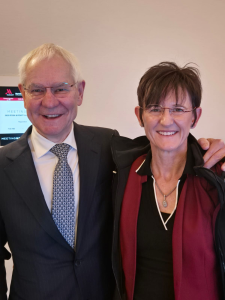
Prof. Odette Koch with Dr. Donald H. Lalonde, esteemed hand surgery expert and pioneer of WALANT techniques.
What about WALANT surgery attracted Dr Koch?
The Canadian, Dr. Donald H. Lalonde, visited South Africa in February 2019. He was a guest of SASSH. Dr Lalonde’s absolute passion and excellent results convinced me to start with WALANT. I proceeded to start with it, as early as March 2019. My whole outlook on hand surgery has changed!
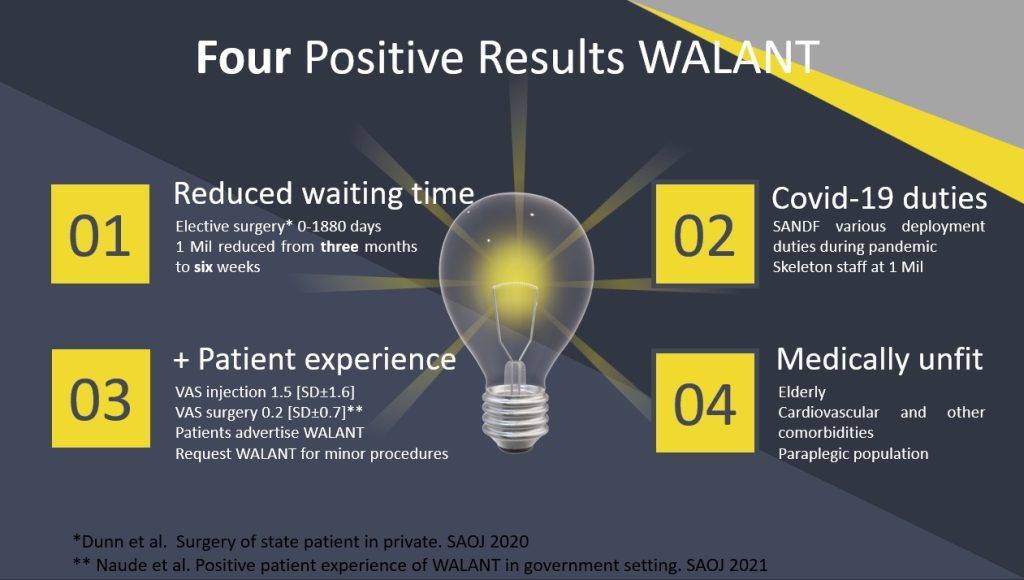
The patients are part of the operation. Therefore they see, for example, during a trigger finger release. Immediately, that the finger is no longer stuck, after the pully has been cut.
This has a beneficial effect on the patient’s rehabilitation. In a recent study (awaiting publication) the patients had almost no pain during the operation. Furthermore, 100% of the patients said they would do the procedure again under WALANT, if they had the choice. The positive experience is absolutely worth my while.
My WALANT theatre is my “happy place”.


Call Us Today for your Orthopaedic Consultation
Alternatively, please send an e-mail to our administrative team.
